CPO tank monitoring
A clearer view of tank levels.
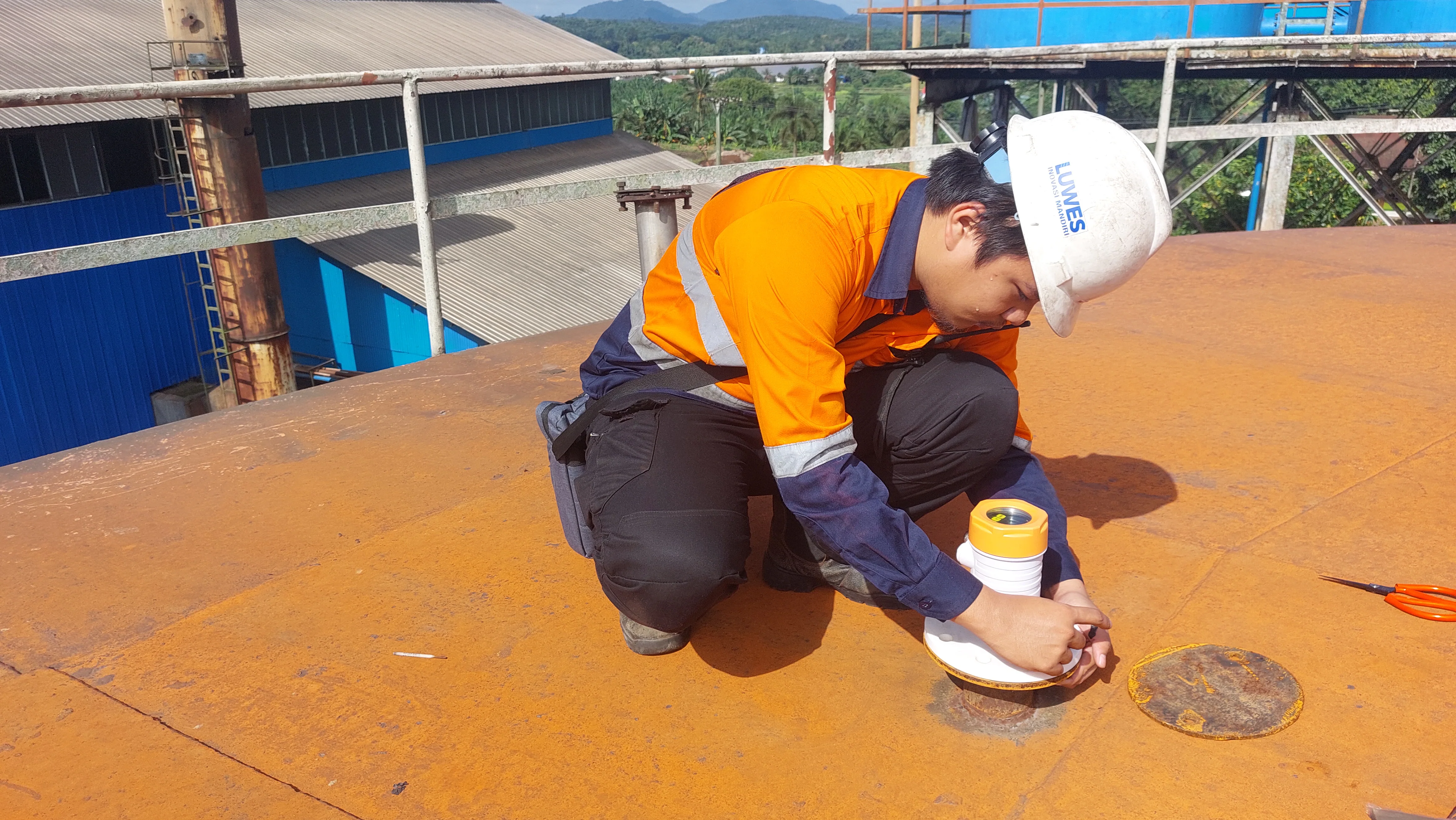
Follow liquid levels and temperature across your storage tanks. Radar and RTD readings give operators a shared record for reviewing stock, checking unusual changes and planning the next step.
How it works
Two measurements. A clearer tank record.
See the difference between reading a liquid surface and measuring temperature inside a tank.
Follow the measurement
Radar reads the distance to the liquid without touching it. Fittings and surface conditions influence sensor selection and positioning.
RTD probes measure temperature where installed. The number and depth of points follow the tank design.
Operators review the record. A volume estimate also needs tank geometry or a calibration table; temperature alone does not determine CPO quality.
Concept illustration. Configuration follows the site design.
Level, temperature and their changes
Tank level
Radar measures the distance to the liquid surface without touching it. Sensor selection and installation account for the tank, fittings and operating conditions.
Temperature profile
RTD probes record temperature at the installed points. Multiple points can show differences across the tank, where specified in the design.
Trends and limits
Review levels and temperature over time, and configure notifications at agreed limits. Updates depend on the recording interval and available connection.
From a reading to an operating decision
Measure
Radar reads the surface level; RTD probes record temperature.
Calculate
Convert level to an estimated volume using tank geometry or a calibration table.
Review
Compare trends and configured limits with the operating context.
Follow up
Operators check readings and decide the next storage or inspection action.
Know what these readings can tell you
Volume depends on the tank
A level reading is not a volume by itself. Dimensions, geometry or tank calibration data are needed for the conversion, followed by checks against reference measurements.
Quality needs its own tests
Level and temperature help describe storage conditions. They do not measure chemical quality or identify contamination; those questions require appropriate sampling and analysis.
Define the measurement configuration
Level measurement
- Method
- Non-contact radar
- Range and accuracy
- Confirm for the selected sensor model
- Installation
- Review tank height, fittings and surface conditions
Temperature measurement
- Sensor
- RTD probes
- Measurement points
- Single or multiple points, according to the design
- Range and accuracy
- Confirm for the probe and acquisition system
Volume estimate
- Calculation basis
- Tank geometry or tank calibration table
- Verification
- Compare against site reference measurements
- Output
- Inventory records within the agreed scope
Data and notifications
- Limits
- Configured level and temperature limits
- Updates
- Agreed recording and transmission intervals
- Access
- Dashboard or site integration, as specified
Make an informed choice
What do you need to know about the CPO in your tank?
CPO means crude palm oil. This system focuses on tank level and temperature readings for daily operations. Begin with the tank and the decisions operators need to make, then define whether you need levels alone, an estimated inventory or further quality checks.
Level, volume and quality are different answers
Radar reads the liquid surface; temperature probes read the points where they are installed. Converting level into volume needs suitable tank dimensions or a tank calibration table. Mass estimates require additional agreed inputs. These readings alone do not establish oil quality, contamination or a value approved for commercial transfer; discuss the necessary testing separately.
Review the tank before selecting a sensor
Provide tank height, shape, roof details and available mounting connections. Internal fittings, changing surface conditions, operating temperature and safe access can affect the design. Confirm sensor materials and environmental suitability for the actual process. The number and position of temperature probes should follow the information needed, not an assumption that one point describes the whole tank.
Make the instrument and software scope clear
Ask for radar and temperature-probe models, recorder or controller, wiring, power, displays and any network connection. If a volume screen is requested, include the conversion method and verification. Installation permits, testing, training and integration with existing plant systems need their own scope. Agree data access, recurring fees and the maintenance responsibilities.
Give operators context for each reading
A useful screen shows the unit, timestamp, reference and whether a reading is current. Agree alarm limits and who checks a suspected overfill or temperature issue. Monitoring does not automatically switch pumps or replace an independent safety device. Plan comparison checks after installation and records of sensor adjustments, maintenance and changes to the tank.
Questions before you buy
Does the system measure oil quality?
Level and temperature alone do not determine all quality properties. Identify any required laboratory or additional sensor tests separately.
Can the screen show volume?
If the agreed system includes a suitable conversion using validated tank information. Ask how the calculation will be checked.
Is one temperature probe enough?
It reads its installed point. The required temperature profile determines the number and placement of probes.
Can it stop a filling pump?
Only through a separately designed and tested control scope. A monitoring display does not automatically provide that function.
Can it connect to the factory control system?
Share the controller, connection types and required signals. Compatibility and site policy must be reviewed first.
Will every tank use the same package?
Not necessarily. Tank geometry, fittings, temperature and reporting needs can change the equipment and installation scope.
Compare and explore
References for the explanation
These explain measurement or system principles. The equipment and service offered are confirmed in your quotation.
Start with your tank layout.
Share tank dimensions, available calibration tables, operating temperatures and connection options. These help select instruments and define the data your operators need.