Industrial digitalization
Connect data with daily operations.
A reading becomes useful when the right team can understand it and record the next step. Connect field information, notifications and work records around the way your operation runs.
- Information across sites
- Recorded follow-up
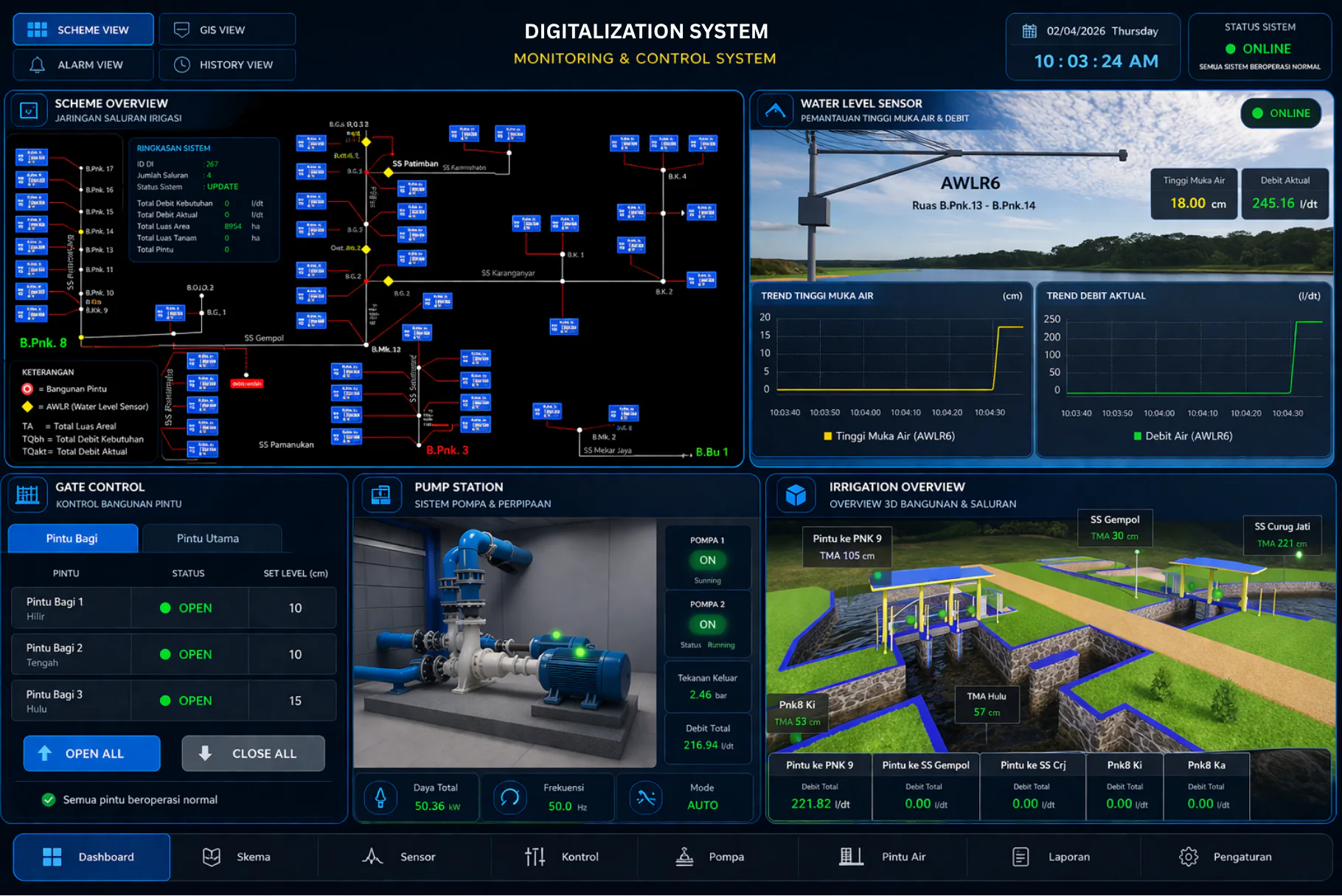
One workflow, different responsibilities
Operators see the context
Read equipment status, recent measurements and alarms in one view. Time and source information help the team check what they are seeing.
Field teams record the follow-up
Link an inspection or action to the event that prompted it. Records make it easier for the next shift to understand what was checked.
Supervisors review the work
Review unresolved events, operating summaries and history across sites. Reporting is designed around the information your team needs.
From the field to a recorded next step
Collect
Map sensors, PLCs and existing records. Define units, timestamps and checks for incoming values.
Connect
Bring compatible readings, events and records into the agreed system.
Follow up
Define who reviews an event, acknowledges it and records the action taken.
Review
Use history and reports to review outstanding work and plan improvements.
Define what your system needs to include
Start with the work rather than a list of modules: the reading to be reviewed, the responsible person and the record needed afterward.
Connected information
Sensor readings, PLC status, telemetry and supported CCTV sources can be linked after compatibility and network review.
Events and responsibilities
Define notification limits, acknowledgement steps and user permissions. Equipment control requires its own approved control logic.
Records and reports
Agree the record fields, history period and report format. Your team's review needs determine the output.
How is this different from SCADA?
SCADA focuses on acquiring readings and supervising equipment controls. Digitalization connects those readings with inspections, responsibilities and reporting across the operation. The two can work together when the interfaces support it.
Make an informed choice
Which daily task should become easier first?
Industrial digitalization connects readings, inspections and follow-up records so people can find the information they need. Start with one difficult routine, such as shift handover, repeated manual reports or tracking unresolved alarms. A useful first phase should make that routine clearer for the people doing it.
Fix a working process, not just its appearance
Map where information comes from, who checks it and what happens next. A digital form alone will not solve inconsistent units, missing timestamps or unclear responsibility. Discuss whether the immediate need is an inspection record, shared dashboard, equipment connection or control system. This keeps a small practical improvement from becoming an unnecessarily large project.
Make the source and meaning of each record clear
A measurement and a manually entered inspection need clear labels. Agree the units, timestamps, equipment identity and handling of corrections. Review existing spreadsheets, applications and sensor connections before planning an integration. Users need to distinguish a current reading from an old one and a completed action from an item still waiting for review.
Design around the people and their connection
Discuss field phones, office screens, user permissions and the actual network at each site. Offline entry or later synchronisation is a feature to specify and test, not assume. Assign people to review alarms, approve changes and keep access current. Remote equipment control requires its own tested control scope; a reporting application does not provide it automatically.
Choose a first phase you can assess
Agree a pilot area, users, screens, reports and acceptance checks before expanding. Include data migration, training, support and the route for correcting mistakes. Ask who owns the data, how it is exported and how backups are restored. Separate development costs from server, licence and ongoing service charges so later growth is easier to plan.
Questions before you buy
Do we need to replace all our equipment?
Not necessarily. Review existing devices and connections first; retain suitable equipment where the agreed design allows it.
Can we start with one department?
A defined pilot can help. Agree its data, users and success checks before deciding how to expand.
Can our spreadsheets be imported?
Review samples, formats, duplicate entries and missing fields. Migration work needs its own agreed scope.
Can field staff use it without a signal?
Only if an offline workflow is included and tested. Clarify what is stored locally and how conflicts are resolved later.
Is this the same as SCADA?
They can work together. Digital records support work routines; SCADA concerns equipment supervision and agreed control functions.
Can we take our data out later?
Specify ownership, export formats, access and retention in the agreement before choosing the platform.
Compare and explore
References for the explanation
These explain measurement or system principles. The equipment and service offered are confirmed in your quotation.
Start with a task your team repeats.
Bring an example report, inspection form or alarm-handling process. We can map the data, people and connections needed for a practical system.