Vibration Monitoring: From Detection to Action
Vibration monitoring enables industries to detect early signs of mechanical deterioration, reduce unplanned downtime, and make more informed maintenance decisions through continuous or periodic machine condition data.
Depok — Amid growing demands for productivity, safety, and operational continuity, industries are increasingly expected to understand the condition of their machinery before deterioration develops into failures that disrupt production. One important approach in this strategy is vibration monitoring.
Vibration monitoring works by measuring and analyzing vibration characteristics in rotating equipment such as motors, pumps, fans, blowers, gearboxes, compressors, and turbines. Changes in vibration patterns can indicate changes in mechanical condition, giving maintenance teams an opportunity to conduct further inspection before the issue develops into a more serious failure.
This practice is more than just a technological trend. ISO 13373-1:2002 provides general guidelines for vibration measurement and data collection in condition monitoring, including measurement methods and parameters, sensor selection and placement, machine operating conditions, and both continuous and periodic monitoring. Meanwhile, ISO 20816-1:2016 provides guidance for measuring and evaluating vibration based on vibration magnitude and changes over time to support safe and reliable long-term machine operation.
Why Is Awareness of Vibration Monitoring Important?
One of the major challenges in maintenance is that mechanical deterioration is not always visible from the outside. A machine may continue to operate while bearings, alignment, gearboxes, or other components are already beginning to degrade.
For this reason, vibration monitoring should not be viewed solely as the responsibility of a vibration analyst, but also as part of broader maintenance awareness within industrial operations. Consistent changes in vibration can prompt reliability teams to ask: Is the machine condition changing? Is further inspection required? Can maintenance be planned before a shutdown occurs?
This diagnostic approach is also supported by international standards. ISO 13373-3:2015 provides a structured approach to vibration diagnostics for rotating machinery, while ISO 13373-9:2026, published in August 2026, specifically addresses vibration-based diagnostic procedures for various types of electric motors.
Industrial Case: Detection of a Critical Fault in a 1,000-Ton Stamping Machine
One ERBESSD INSTRUMENTS® case study comes from an automotive manufacturing plant in Morocco, where a 1,000-ton stamping machine began showing unusual noise and abnormal vibration indications. To identify the source of the issue without stopping production, the team deployed 12 PHANTOM® wireless sensors integrated with the EI-Analytic™ platform for continuous vibration monitoring.
Approximately 12 hours after monitoring was activated, the system generated an automatic alarm for abnormal vibration behavior. FFT analysis revealed recurring peaks at 100 Hz, 200 Hz, and 300 Hz, corresponding to harmonics of the 50 Hz electrical supply frequency rather than typical mechanical fault patterns such as unbalance, misalignment, or gear mesh. The analysis pointed to a possible electrical issue, such as phase imbalance, insulation defects, or PWM switching noise from the motor drive.
This case demonstrates that vibration monitoring can be used not only to detect mechanical faults, but also to help identify other anomalies affecting machine condition. According to the ERBESSD INSTRUMENTS® case study, the issue was identified before it developed into a failure, allowing the team to prepare a more targeted inspection without interrupting operations. ERBESSD also reported a potential avoidance of approximately €300,000 in motor replacement costs; this figure should be understood as a provider-reported estimate from this specific case rather than a universal benchmark.
Energy Industry: Vibration Monitoring in Wind Turbines
The importance of vibration monitoring is also evident in the renewable energy sector. The U.S. National Renewable Energy Laboratory (NREL) conducted a study on a wind-turbine gearbox that had previously experienced two oil-loss events during field operation. These events caused damage to internal bearings and gears.
Vibration data from the gearbox was then used in the Wind Turbine Gearbox Condition Monitoring Round Robin project to evaluate different vibration analysis methods. The project involved academic researchers and industry partners and aimed to assess the effectiveness of methods used in wind-turbine condition monitoring.
Reference: National Renewable Energy Laboratory (NREL), 2012 — Wind Turbine Gearbox Condition Monitoring Round Robin Study – Vibration Analysis, Technical Report NREL/TP-5000-54530.
The relevance of vibration monitoring in this sector is further reinforced by ISO 20816-21:2025, a standard specifically addressing the measurement and evaluation of mechanical vibration in horizontal-axis wind turbines and their components.
From Emergency Maintenance to Planned Maintenance
A more recent case was reported in August 2026 at an industrial mill. After serious bearing damage was identified on critical rotating equipment, online vibration monitoring was used to continuously track the bearing condition while replacement was being prepared.
According to a TechStar case study, continuous vibration monitoring allowed the team to observe the actual equipment condition until the bearing could be replaced before a catastrophic failure occurred. TechStar reported that the planned intervention helped reduce shutdown time by at least 48 hours. Because this figure comes from a solution provider’s case study, it should be understood as the reported result from that specific case rather than a universal benchmark for all industrial facilities.
Reference: TechStar, 2026 — Online Vibration Monitoring Helps Prevent Catastrophic Mill Failure.
The message remains clear: the earlier a change in machine condition is detected, the greater the opportunity for maintenance teams to turn unexpected events into planned work.
Building a “Listen to the Machine” Culture
Awareness of vibration monitoring does not mean that every machine must immediately use the most complex monitoring system available. The monitoring strategy should be aligned with asset criticality, equipment characteristics, and operational requirements.
For critical assets, vibration can be monitored continuously. For other equipment, periodic measurement may be a more appropriate approach. ISO 13373-1 includes both continuous and non-continuous/periodic monitoring as part of vibration condition monitoring.
Ultimately, vibration monitoring is not only about sensors, software, or spectrum graphs. Its true value emerges when the data is translated into information that supports maintenance decisions.
Machines often show changes in their signals before conditions develop into more serious failures. The challenge is whether industries have the systems, capabilities, and awareness to recognize those changes at the right time.
Wireless Vibration Monitoring Solution
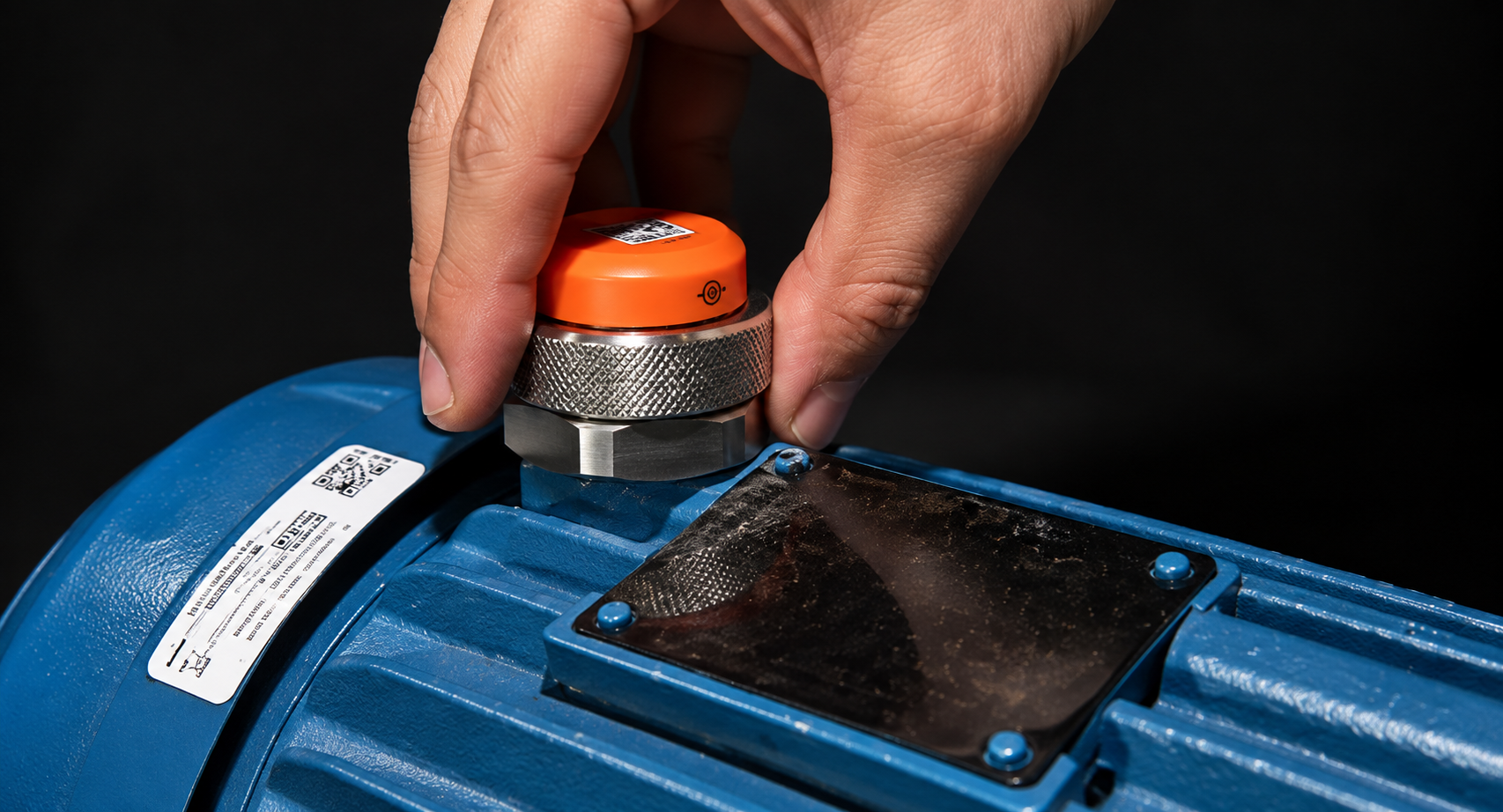
Figure 1: Installation of PHANTOM® Wireless Vibration Monitoring
To support a more practical implementation of vibration monitoring, ERBESSD INSTRUMENTS® offers the PHANTOM® Wireless Vibration Monitoring System. PHANTOM sensors can transmit FFT spectrum and time waveform data via BLE 5.0 to a gateway, after which the data is forwarded to a monitoring system or database to support continuous machine condition monitoring. The system also supports flexible measurement configuration and integration through Gateway 2.0.
With a wireless approach, vibration monitoring can be implemented without the need for extensive sensor cabling at every measurement point. However, successful implementation still requires proper measurement-point selection, appropriate configuration, and the ability of the maintenance team to interpret the data and convert it into effective maintenance actions.
For companies interested in learning more about implementing PHANTOM® Wireless Vibration Monitoring, including system requirements, product purchases, consultation, or a trial/demo on actual machinery, please visit PT Luwes Solusi Spasial at www.luwessolusispasial.com or contact the team to discuss a condition monitoring solution that fits your field application.
Interested in experiencing PHANTOM® on your own machine?
Consult with the Luwes Solusi Spasial team and schedule a product trial or demonstration for your equipment.
PT Luwes Inovasi Mandiri
Industrial IoT & Monitoring Solutions
🌐 www.luwesinovasimandiri.com
📷 Instagram: @luwesinovasimandiri
💼 LinkedIn: Luwes Inovasi Mandiri
📘 Facebook: LuwesSolutions
📲 Whatsapp : +62 811-8185-5558
📍 Luwes Office : Depok, West Java, Indonesia
PT Luwes Solusi Spasial
Wireless Machine Health Monitoring & Predictive Maintenance Solutions
🌐 www.luwessolusispasial.com
💼 LinkedIn: PT Luwes Solusi Spasial
📧 Email : marketing@luwessolusispasial.com
📲 WhatsApp: +62 812-3537-2853
📍 Office Luwes : Depok, West Java, Indonesia