Automatic Rainfall Recorder (ARR)
Understand rainfall at your site.
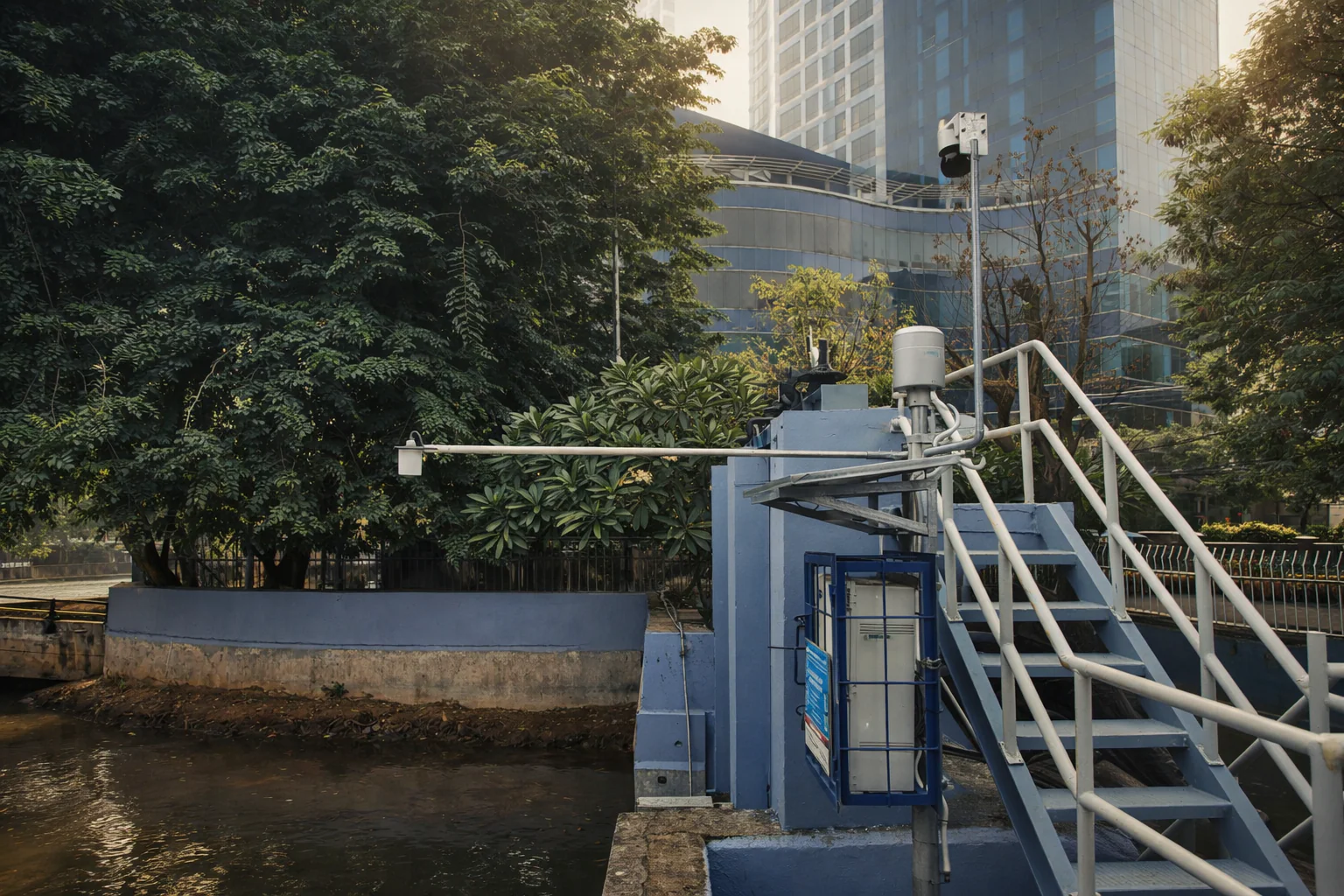
Rainfall can differ from one location to another. ARR records the rain that reaches your site, giving your team a local record for research, irrigation and water monitoring.
How it works
An example: how a tipping-bucket gauge works.
This illustrates the tipping-bucket method. The Lambrecht ARR brochure describes a weighing sensor, which uses a different mechanism. Confirm the offered model.
Follow the measurement
The collector directs rainfall into the measuring mechanism. A clear, level installation helps the gauge record rain at the site.
A bucket tips after collecting its calibrated amount of water. The sensor registers that movement as a pulse.
The recorder accumulates pulses over time. Calibration, recording intervals and any remote connection are confirmed for the selected setup.
Concept illustration. Configuration follows the site design.
A simple mechanism. A useful rainfall record.
Rain measured at your site
The gauge measures collected rain. Weighing and tipping-bucket gauges use different methods; confirm the model and its calibration.
Time matters as much as amount
The recorder keeps rainfall events over time, helping your team compare wet periods and cumulative totals.
Plan for regular checks
A clear collector and checked installation help maintain useful measurements. Automatic recording still needs field care.
Every shower becomes part of the record.
The gauge measures rainfall at its installation point. A suitable position and regular checks remain important.
- 01
Rain enters
Place the collector where nearby objects do not obstruct rainfall.
- 02
The gauge measures
The selected gauge measures rain by weight or calibrated bucket tips. Its output is recorded over time.
- 03
Events are recorded
The recorder groups readings by time to form a rainfall history.
- 04
Your team reviews
Compare rainfall totals and timing with observations and other site measurements.
Local rainfall, practical uses.
Catchments and rivers
Relate rainfall records to changing river levels and catchment conditions.
Farms and irrigation
Use local rainfall totals as one input when planning watering and fieldwork.
Field research
Build a time-based record for comparing rainfall between periods and monitoring sites.
Plan the configuration for your site.
Rainfall measurement
- Method
- Weighing or tipping bucket, depending on model
- Record
- Rainfall amount with time information
- Resolution and accuracy
- Confirmed from the selected gauge and calibration
Site configuration
- Placement
- Level mounting with an unobstructed collector
- Power and connection
- Selected for the installation site
- Field care
- Collector cleaning and periodic checks
Make an informed choice
What should a rainfall station tell you?
ARR means automatic rainfall recorder. It suits teams that need a time-based rain record for a catchment, farm or project site. Decide whether you need rainfall totals, changing intensity or information to compare with river levels before choosing the package.
Rainfall is a local measurement
A rain gauge reports rain that reaches its collecting area. One station should not be assumed to describe every part of a large catchment. If temperature, humidity and wind also matter, compare an AWS weather station. If the question is rising water, combine the rain record with suitable water-level observations.
Confirm how the selected gauge measures rain
ARR describes automatic recording, not one measuring mechanism. A weighing gauge measures collected precipitation by weight; a tipping-bucket gauge counts bucket tips. Ask which model is offered and why it suits your task. Resolution is not the same as accuracy: request both, along with the recommended range and calibration procedure.
Keep the collecting area clear
Plan a level mounting surface and check nearby roofs, trees and walls that can affect collection. A safe maintenance route matters because leaves, insects and dirt can obstruct the funnel. Ask the proposal to include the gauge, recorder, stand, power and connection choices, plus installation checks and any platform or communication fees.
Make a missing reading easy to spot
Agree timestamps, rainfall totals and reporting intervals before comparing stations. A blank record can mean a connection or equipment problem, not zero rainfall. Confirm storage during outages, later data retrieval and a cleaning schedule. Keep a record of maintenance and calibration so unusual totals can be reviewed with their field context.
Questions before you buy
Is ARR the same as AWS?
ARR focuses on rainfall. AWS combines weather measurements using the sensors selected for the station.
Will one gauge cover my whole estate?
It measures one location. Station count and placement depend on area, terrain and the decisions the data must support.
Does it predict rain?
It records rain at the site. Forecasts are a different data source and can be discussed separately.
What does resolution mean?
It is the smallest recording step for that gauge. It does not by itself establish the measurement accuracy.
Does the gauge need cleaning?
Yes. Inspect the collecting area, measuring mechanism and mounting condition using the selected model's instructions.
Can rain trigger an alert?
If configured in the agreed system. Set the threshold, time window, recipients and response process before relying on it.
Compare and explore
Examples and further reading
References for the explanation
These explain measurement or system principles. The equipment and service offered are confirmed in your quotation.
Which rainfall record does your team need?
Discuss the location, gauge configuration, recording interval and how the data will be collected.