Automatic Weather Station (AWS)
Know the weather at your site.
Rain, wind and temperature change throughout the day. AWS brings local weather measurements together in one station, so your team can review conditions before planning fieldwork.
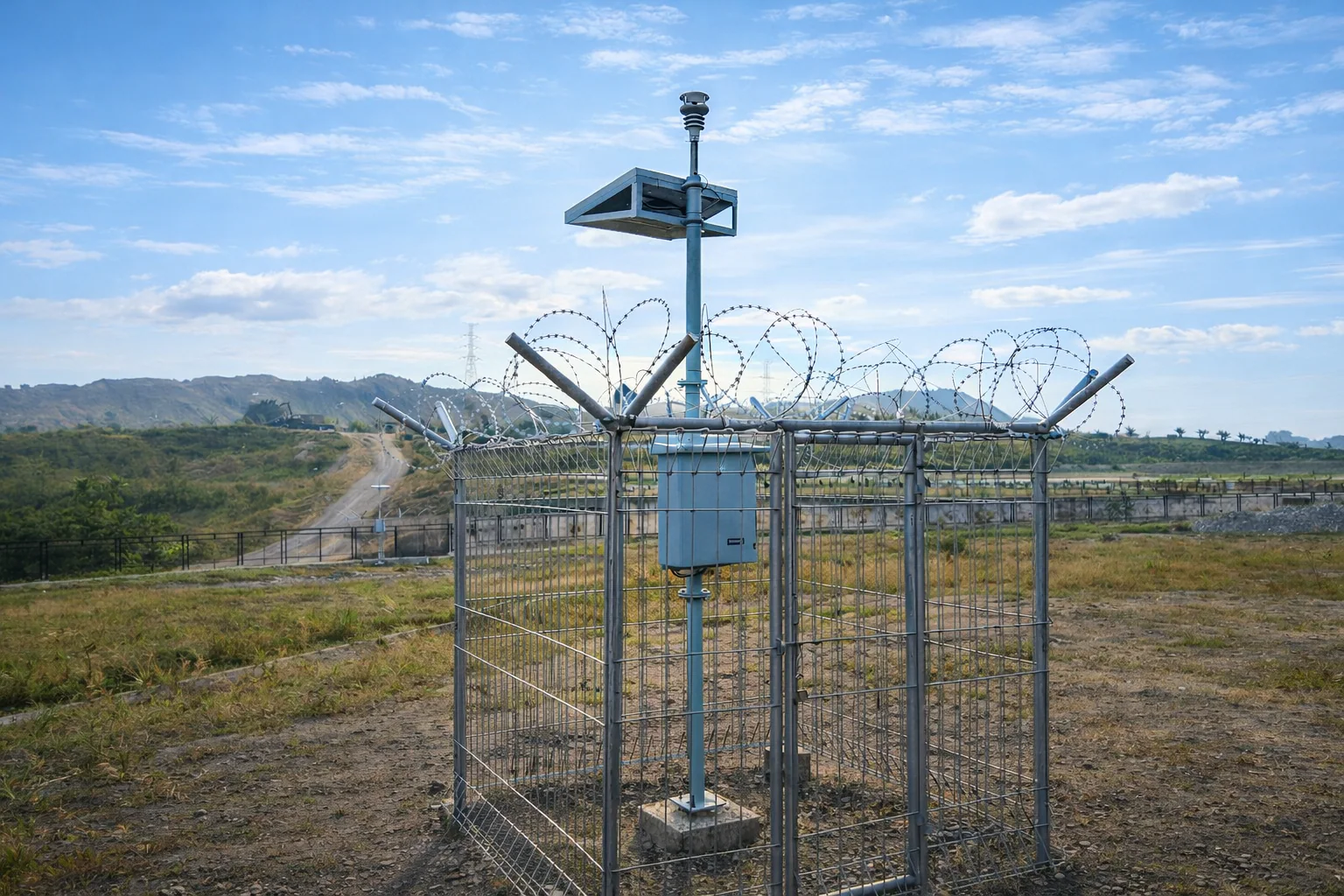
What does your team need to know today?
Start with the decisions and measurements that matter at the site. A weather station measures local conditions; forecasts require a separate data service.
- 01
Start with the work
Identify the weather information your team needs at the site.
- 02
Measure locally
Installed sensors read the surrounding conditions.
- 03
Keep the readings
The recorder brings readings together with their time information.
- 04
Use the record
Review current readings and past conditions in the agreed data system.
AWS / Inside the design
One station. Each part has a purpose.
Explore the components, then rotate the assembled station in 3D.
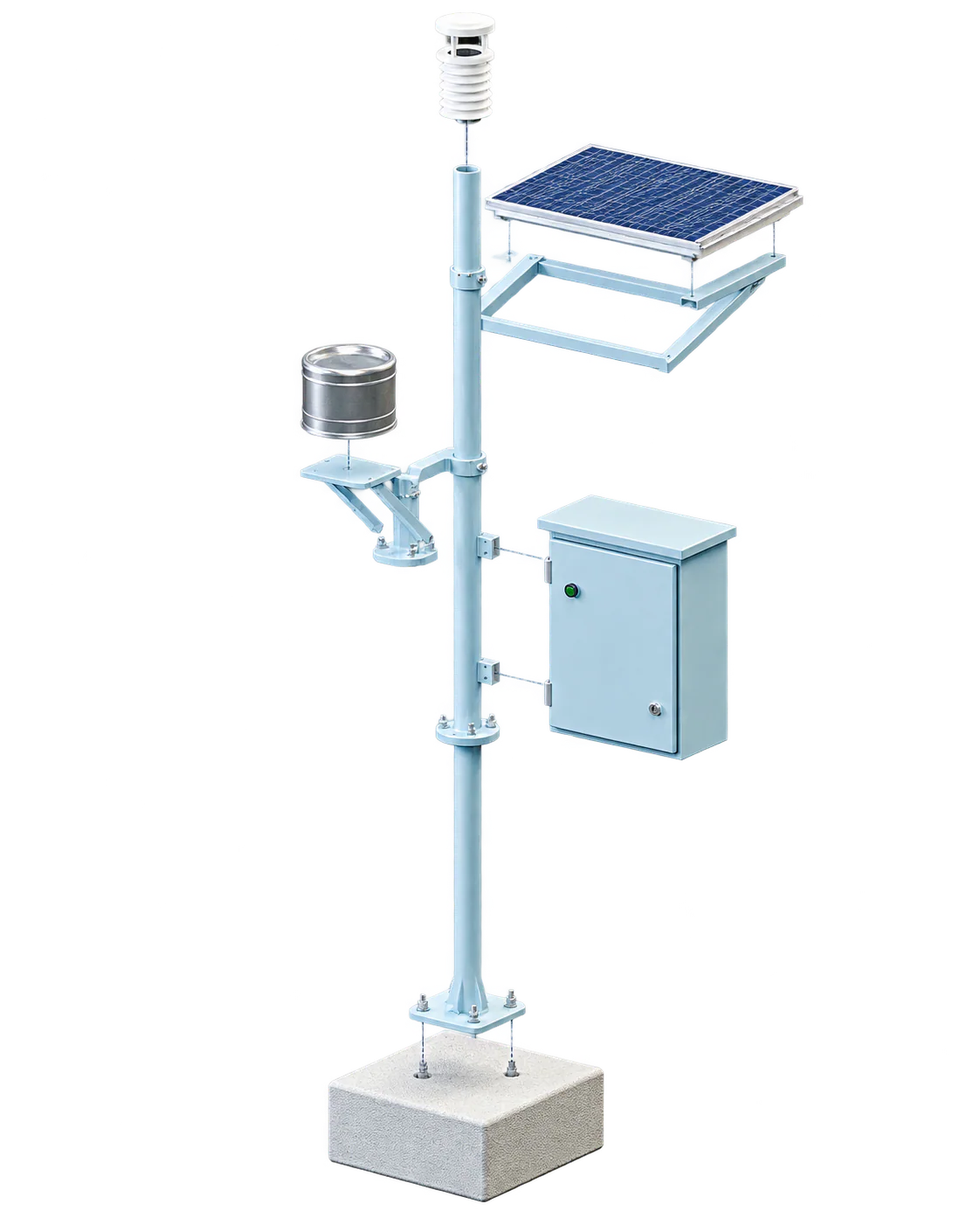
Drag to rotate · + / − to zoom
Surface transparency shows the model geometry, not the electronics inside.
From measurement to record
Designed to work together.
- 01
Weather measurements
Weather sensor and rain collector record conditions at the site.
- 02
Solar power
The panel supplies power for field operation.
- 03
Protected control unit
The cabinet houses the equipment that records and manages measurements.
Illustration and reference model. The final equipment follows your site configuration.
Explore the reference assembly and dimensions
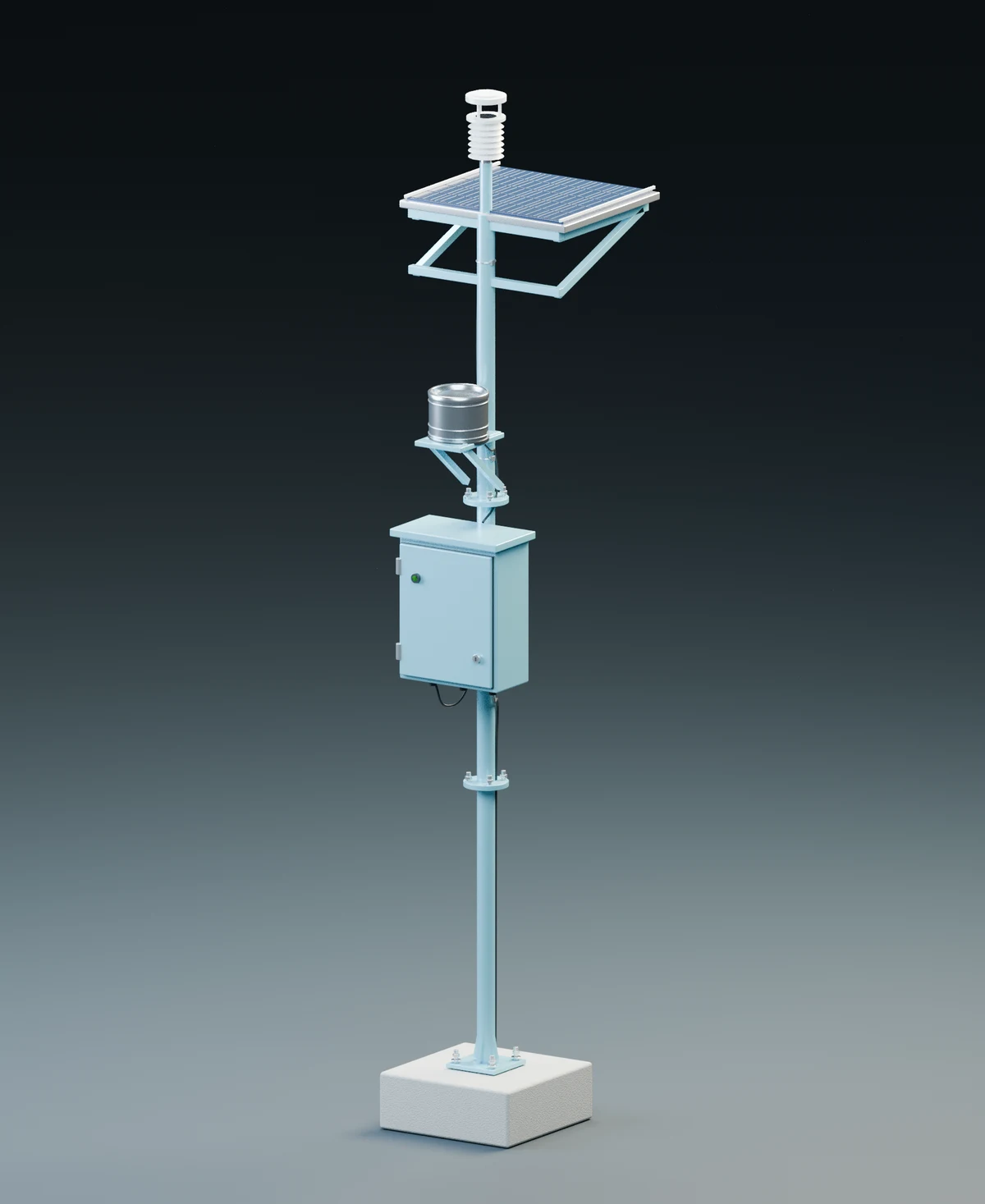
AWS assembly
Each part has a purpose.
Weather sensors, solar power and a control cabinet work together in one field station.
Weather sensors
Observe conditions at the site.
Rain collector
Collect rain for measurement.
Solar panel
Supply power for field equipment.
Control cabinet
House recording and communication equipment.
Reference drawing dimensions
- Main mast
- 3,000 mm
Base to mast top, excluding the sensor.
- Lower mast section
- 1,000 mm
Height to the flange shown in the drawing.
- Control cabinet
- 400 × 500 × 200 mm
Width × height × depth of the cabinet body.
Reference visualization. Mast and cabinet dimensions follow the drawing; other components, cable routes and mounting details are estimates.
Choose the measurements your site needs.
These sensor choices form the station configuration. Visibility and UV need additional sensors; the final set is agreed for your project.
Air temperature
Follow how warm or cool the air is at the installation site.
Air humidity
Read moisture in the air alongside temperature.
Rainfall
Record the amount and timing of rain at your station.
Wind speed
Observe changes in wind strength over time.
Wind direction
See the direction the wind comes from.
Solar radiation
Measure incoming solar energy with the selected sensor.
Air pressure
Follow changes in atmospheric pressure.
Visibility · optional
Requires a dedicated sensor and a suitable installation.
UV index · optional
Add UV measurement when the project requires it.
Weather records that fit your work.
Farms and growing areas
Bring local rain, temperature and humidity into irrigation and fieldwork planning.
Environmental research
Compare weather conditions between periods and measurement locations.
Energy and site assessment
Observe wind and solar conditions with a sensor configuration suited to the study.
Plan the configuration for your site.
Sensor selection
- Measurements
- Selected from the project's required parameters
- Additional sensors
- Visibility and UV are optional
- Range and accuracy
- Specified for each selected sensor model
Data and installation
- Connection
- Chosen for network coverage at the site
- Power
- Solar panel and battery sized for the configuration
- Record access
- Recording and display arranged with the project team
Make an informed choice
Choose the weather measurements your work needs
AWS stands for automatic weather station. It brings selected weather sensors together at a site. A useful package starts with your work: planning farm activities, reviewing outdoor conditions or keeping a local weather record—not simply choosing the longest sensor list.
Start with the decision, then the sensors
Discuss temperature, humidity, rainfall, wind, air pressure and solar radiation separately. Visibility or UV measurements need their own suitable sensors when required. A station with rainfall alone may be enough for some jobs; other jobs need an AWS and forecast data together. Ask which measurements are included, optional or outside the proposal.
A good site is part of a good measurement
Buildings, shade, vegetation and nearby heat sources can change what a sensor reads. Review the surroundings, mounting heights and future changes to the site. The layout depends on the measurement and available space. The product illustration explains component roles; it is not proof that every displayed sensor is included in a standard package.
Compare the whole station and its running costs
Request the sensor models, stated performance, recorder, mounting equipment and power design. Also check connection charges, platform access, user accounts, export formats and storage period. Installation, testing and training should be separately clear. Ask how readings are marked when late or missing, rather than assuming the screen always shows a current condition.
Keep local observations useful over time
Plan cleaning, physical checks and model-specific calibration with someone responsible for the station. Record replacements and changes to the surroundings. Compare suspicious values with field observations before using them in decisions. An AWS measures its installation site; it does not automatically produce a forecast or describe every part of a large estate.
Questions before you buy
Are all the listed sensors included?
No single list defines every station. Confirm the selected sensors and any optional measurements in the quotation.
Does AWS forecast the weather?
It measures local conditions. A forecast service can complement those observations through an agreed integration.
Can a solar-powered station run at night?
It needs suitable energy storage. Battery capacity and operation during low sunlight must be assessed for the chosen equipment.
Can I download the measurements?
Confirm the export format, available fields, timestamps and access rights for the proposed platform.
How often does it send data?
Measurement, storage and transmission intervals can differ. Agree each interval alongside power and network limits.
What should I ask about maintenance?
Cleaning tasks, check frequency, calibration needs, replacement parts and who visits the station when readings look wrong.
Compare and explore
Examples and further reading
References for the explanation
These explain measurement or system principles. The equipment and service offered are confirmed in your quotation.
Start with the conditions at your site.
Share the location, weather parameters and way your team works. We can discuss a suitable sensor, power and data configuration.