Synoch · Offline water-level recorder
Keep recording beyond network coverage.
At sites with limited signal, Synoch keeps water-level measurements in the device. Your team collects the record during field visits, then reviews the changes over time.
How it works
One connection. A continuous local record.
A sealed recorder, a cable and a submerged probe each have a clear role. Data is collected during field visits.
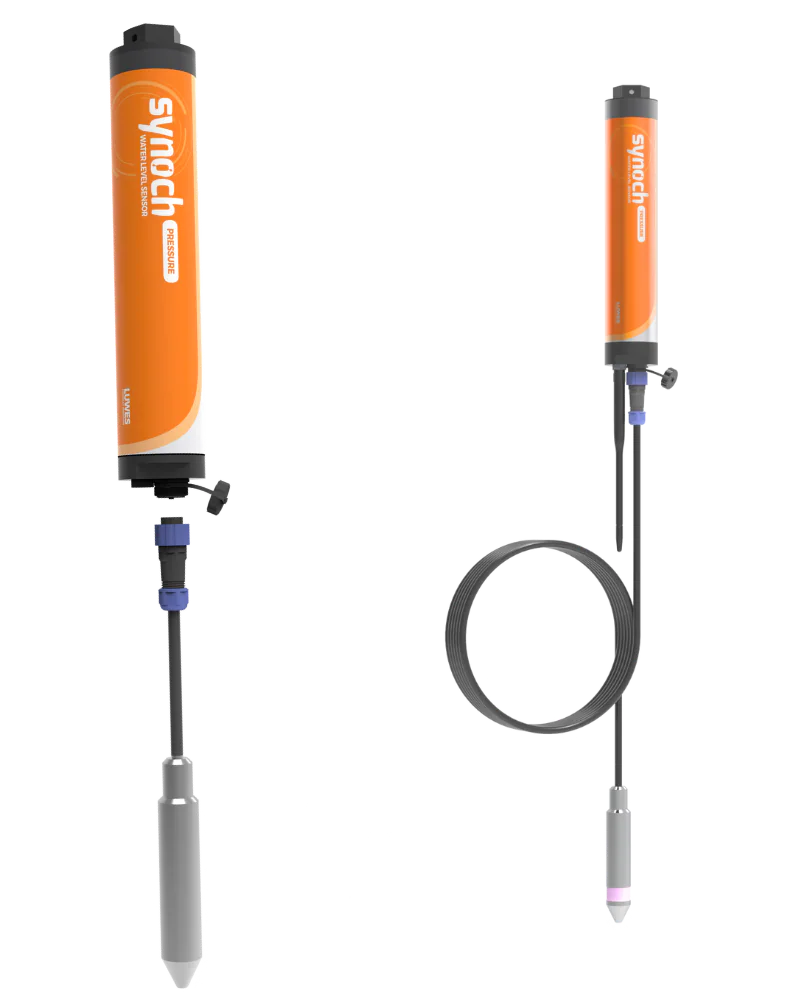
Product image unavailable. Read the component descriptions alongside.
Follow the measurement
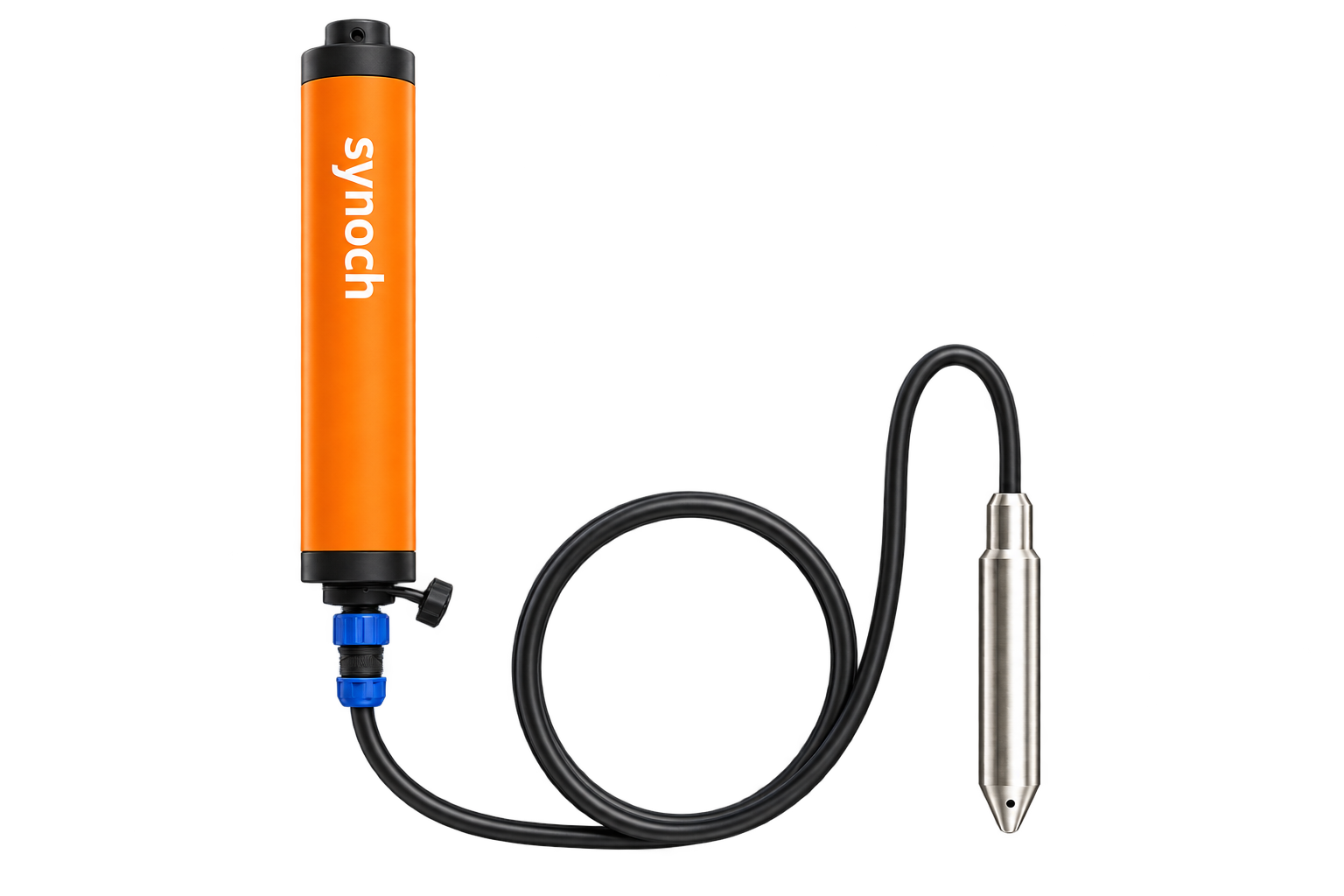
The submerged pressure probe supplies the measurement. Its placement and height reference are set for the observed water body.
The cable connects the probe to the recorder. Cable routing and connector protection follow the installation conditions.
Readings and their timestamps are stored locally. Battery use, optional charging and retrieval through supported local Bluetooth follow the agreed configuration and visiting schedule.
Concept illustration. Configuration follows the site design.
Record now. Collect during the next visit.
Offline recording does not send live updates to a remote team. Agree the visiting schedule and data-transfer method before installation.
- 01
Record at the site
The device stores water-level readings locally, at the configured interval.
- 02
Visit the station
Your team returns on the agreed schedule to check the sensor and power.
- 03
Collect the data
Retrieve stored readings using the local Bluetooth connection supported by the configured unit.
- 04
Review the record
Review the readings after retrieval. Further upload and reporting follow the agreed workflow.
For places you cannot check every day.
Peatland observation wells
Keep a local water-table record between visits. The team retrieves readings during field checks.
Reservoirs and remote waters
Build a water-level history where a reliable remote connection is not available.
Field studies
Collect time-based measurements for later review alongside observations from the site.
Plan the unit around the site.
Recording intervals, sensor selection and field visits determine the configuration. Confirm the technical sheet for the unit being offered.
- Measurement
- Submerged pressure sensor; model selected for the site
- Recording
- Local storage with measurement time information
- Data collection
- Local Bluetooth retrieval on a supported unit
- Power
- Battery and solar-charging options follow the configuration
- Technical sheet
- Range, accuracy, storage and endurance confirmed for the selected unit
Make an informed choice
Need a water record where the network is unreliable?
Synoch is presented here as local water-level recording with planned data collection visits. It suits sites where a historical record matters but continuous remote delivery is not the first requirement. Choose it with the collection routine in mind, not as a live warning station.
Choose offline recording deliberately
A local recorder can keep observations between visits to an observation well, remote water body or research site. Your team must still return to retrieve and review the record. If people need readings or alerts while away from the site, discuss a connected station instead and assess whether a suitable link can be provided.
Protect the sensor and its reference point
The submersible probe reads conditions below the water surface. Review its placement, cable route, expected level changes and a stable height reference. Ask how the proposed sensor handles air-pressure effects, sediment and the installation environment. The sealed device illustration does not describe internal electronics or establish the supplied unit's protection rating.
Design the visit and data collection routine
Confirm the supported local Bluetooth connection, compatible phone or software and export format before ordering. Ask about storage capacity, the recording interval, battery checks and what happens when storage is full. Keeping a copy after collection helps preserve the record. Cloud upload or a further connection must be separately included rather than assumed.
Specify the recorder, probe and field support
Request the exact model, measurement range, power arrangement, cable length, retrieval tools and mounting accessories. Agree installation checks, training and maintenance responsibilities. Ask for a practical demonstration of starting a record and retrieving it. Price and battery life depend on configuration and the recording schedule, so use the offered unit's documented values.
Questions before you buy
Can I see readings from the office?
The offline workflow described here requires local collection. Remote viewing needs a separately agreed connected configuration.
Does Bluetooth need mobile coverage?
The local connection itself does not. Confirm the app's setup, login and later upload requirements separately.
Will it warn me immediately if water rises?
Not through the offline collection workflow. For remote alerts, review a connected monitoring and response arrangement.
How long can it record without a visit?
That depends on battery, storage, measurement interval and conditions. Confirm all four for the selected unit.
Can I place the probe in any water?
Check the materials, permitted depth, water conditions and model-specific instructions before deciding.
What should happen during a field visit?
Collect and back up the data, check the probe and reference, inspect power and cables, and record any changes.
Compare and explore
Examples and further reading
References for the explanation
These explain measurement or system principles. The equipment and service offered are confirmed in your quotation.
When will your team return to the site?
Discuss the water body, available signal, visiting schedule and the readings you need. These details help shape the recording and power setup.