Radar vs Pressure vs Ultrasonic: Choosing the Right Water Level Sensor
Published
PT Luwes Inovasi Mandiri
Contributor: YP
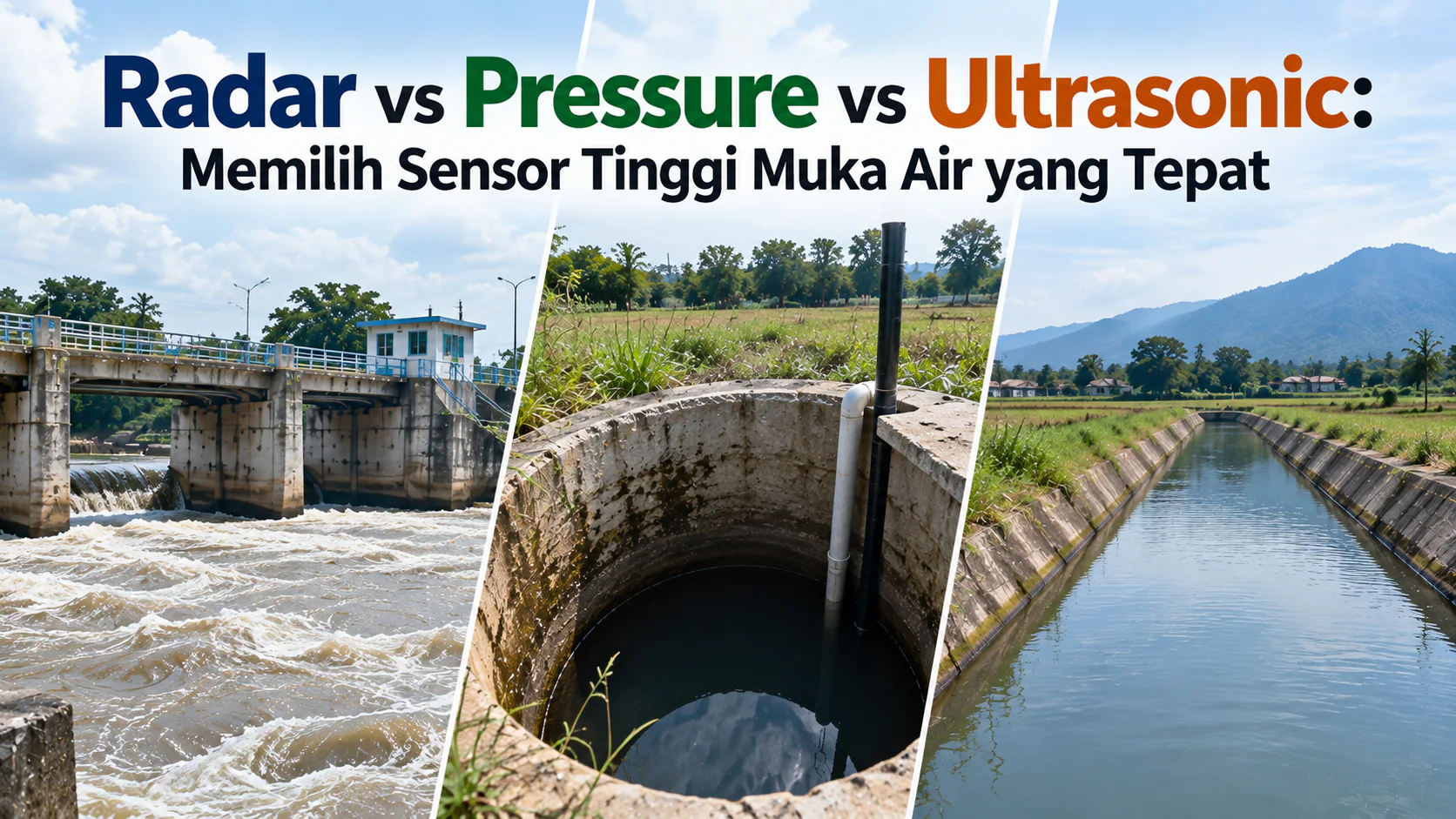
Choosing the right AWLR sensor depends on site conditions, with radar suited to dynamic open-water environments, pressure sensors ideal for wells and groundwater, and ultrasonic sensors effective for stable non-contact measurements.
Depok - Water level monitoring is not only about having a telemetry system capable of transmitting data in real time. Data accuracy is also strongly influenced by the type of sensor used in the field. Rivers, irrigation channels, monitoring wells, lakes, and peatlands all have different characteristics, which means they may require different sensor technologies.
In an AWLR (Automatic Water Level Recorder) system, three commonly used technologies are radar, pressure or hydrostatic pressure, and ultrasonic sensors. Each has its own advantages and is suitable for different site conditions.
Radar Sensor: Suitable for Rivers and Open Areas
Radar sensors operate using non-contact measurement by transmitting electromagnetic waves toward the water surface. The reflected signal is then used to calculate the distance between the sensor and the water level.
One of the main advantages of radar technology is that the sensor does not need to come into direct contact with the water. This makes it suitable for fast-flowing rivers, open channels, weirs, and locations where debris may be carried during floods. Radar sensors are also relatively less affected by changes in temperature and pressure compared with technologies that rely on sound waves.
In the Luwes AWLR system, radar sensors can be used for real-time water level monitoring, particularly in locations that require non-contact measurement and relatively low maintenance.
Pressure Sensor: Effective for Wells and Groundwater
Unlike radar, pressure sensors are installed directly in the water. They measure the hydrostatic pressure created by the water column above the sensor and convert it into information about water depth or level.
This technology is well suited for monitoring wells, groundwater, peatlands, reservoirs, and locations with limited installation space. Submersible pressure sensors can also use atmospheric pressure compensation to reduce the influence of barometric pressure changes on measurement results.
One of the main advantages is the sensor’s compact probe design, which makes it easier to install in narrow monitoring wells. However, because the sensor is submerged directly in the medium, water conditions, sediment buildup, and routine inspection requirements need to be considered.
Ultrasonic Sensor: Non-Contact Measurement at a Competitive Cost
Ultrasonic sensors also operate without direct contact with the water. The difference is that they use sound waves to determine the distance to the water surface.
Ultrasonic technology is widely used for tanks, canals, reservoirs, and various level-measurement applications. It can be a cost-effective solution in relatively stable environmental conditions. However, the speed of sound is affected by temperature, so ultrasonic devices generally use temperature compensation. Conditions such as turbulence or foam should also be considered when selecting and installing this type of sensor.
So, Which Sensor Should You Choose?
There is no single sensor type that is automatically suitable for every location. Radar is commonly selected for rivers or open channels with dynamic field conditions. Pressure sensors are more suitable for monitoring wells, groundwater, and peatlands. Meanwhile, ultrasonic sensors can be used for non-contact applications where environmental conditions support stable measurement.
Therefore, choosing the right AWLR sensor should take into account site conditions, water level range, installation method, surrounding environment, accuracy requirements, and maintenance needs.
PT Luwes Inovasi Mandiri
Industrial IoT & Monitoring Solutions
🌐 www.luwesinovasimandiri.com
📷 Instagram: @luwesinovasimandiri
💼 LinkedIn: Luwes Inovasi Mandiri
📘 Facebook: LuwesSolutions
📲 whatsapp : +62 811-8185-5558
📍 Kantor Luwes : Depok, West Java, Indonesia
Tags:
Thinking of using this at your site?
Start with the equipment and approaches below. Your site requirements determine the right setup.
- AWLR: water level recorderSee how water levels are measured and how installation depends on the site.
- Synoch: offline water level recorderCompare recording options when there is no network coverage.
- Early warning systemsSee how field data, warning thresholds and team actions fit together.
- Explore installation regionsExplore installations grouped by region. Your project may need a different setup.