Portable vs Permanent Water Level Sensors: When Should Each Be Used?
Portable or permanent? Discover the differences between water level sensors and when to use each for monitoring rivers, irrigation systems, and groundwater.
Water level monitoring does not always require a permanently installed monitoring station. For certain applications, portable devices offer greater flexibility because they can be moved from one location to another. However, for continuous monitoring of rivers, irrigation systems, or groundwater, a permanent system is often more suitable.
Both serve the same fundamental purpose: measuring changes in water levels. The key differences lie in their installation methods, operational flexibility, and field requirements.
So, when should you use a portable water level sensor, and when is a permanent system such as an Automatic Water Level Recorder (AWLR) needed?
Understanding Portable Water Level Sensors
A portable water level sensor is a measuring device designed to be easily transported and deployed at different locations. It can be used for hydrological surveys, temporary measurements, or monitoring at sites where permanent installation is not yet required.
One example available through PT Luwes Inovasi Mandiri is the Synoch Portable Water Level Sensor.
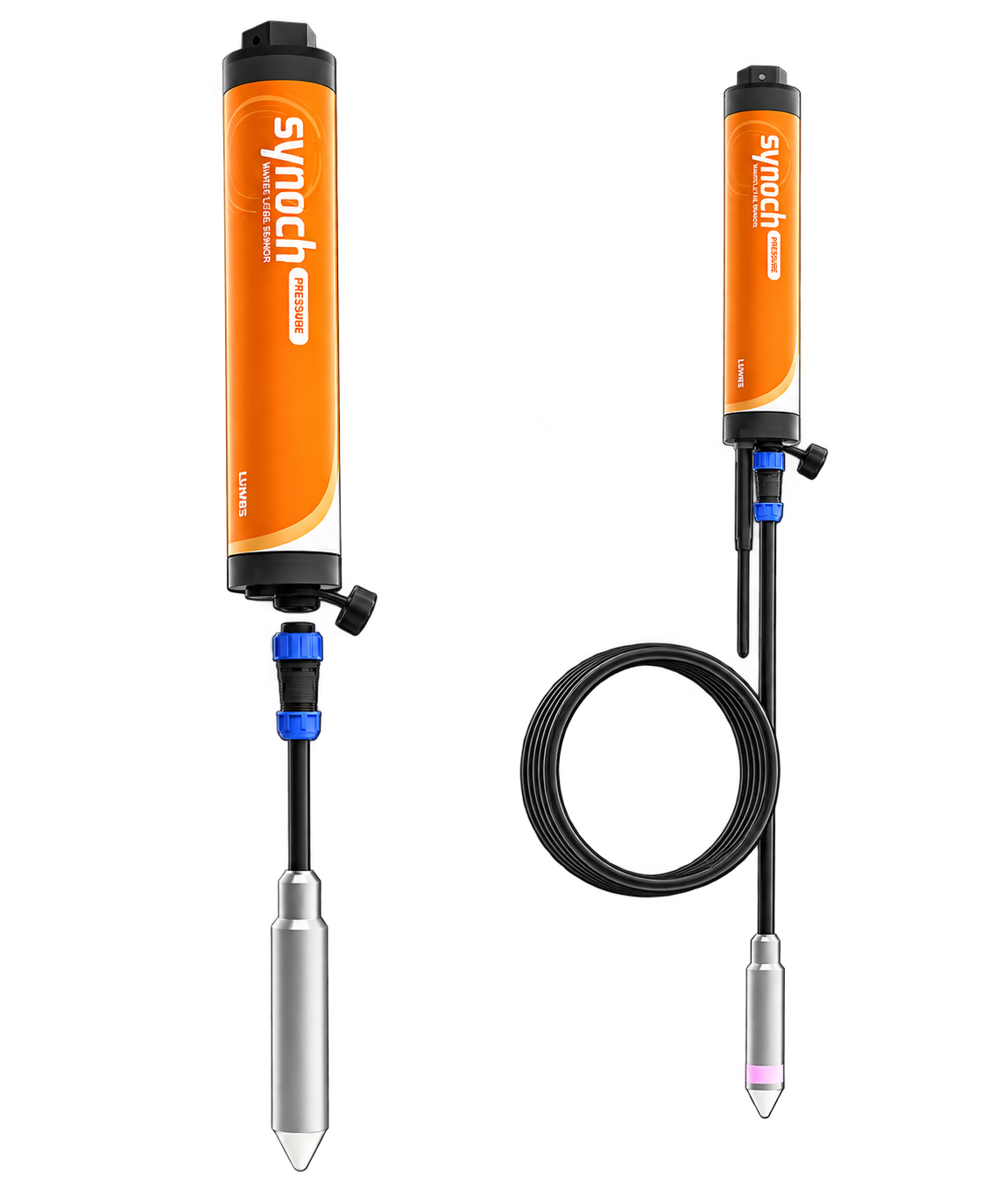
Figure 1: Synoch Portable Water Level Sensor for field water level monitoring.
The Synoch device uses a pressure sensor to measure changes in water levels. The sensor is placed at a specific depth, where the measured water pressure is converted into water level data.
The device is equipped with a data logger, battery, and data transmission capabilities. This allows users to obtain measurement results without having to record readings manually each time.
Its main advantage is operational flexibility. The device can be installed for temporary monitoring and then moved to another location once the measurements are complete.
For example, during an initial irrigation canal survey, a technical team can use a single portable device at several monitoring points in sequence to observe water level conditions.
Understanding Permanent Water Level Sensors
A permanent water level sensor is a measurement system installed at a designated location for continuous monitoring.
These systems are commonly used in rivers, weirs, irrigation canals, coastal areas, and groundwater monitoring wells where regular data collection is required over an extended period.
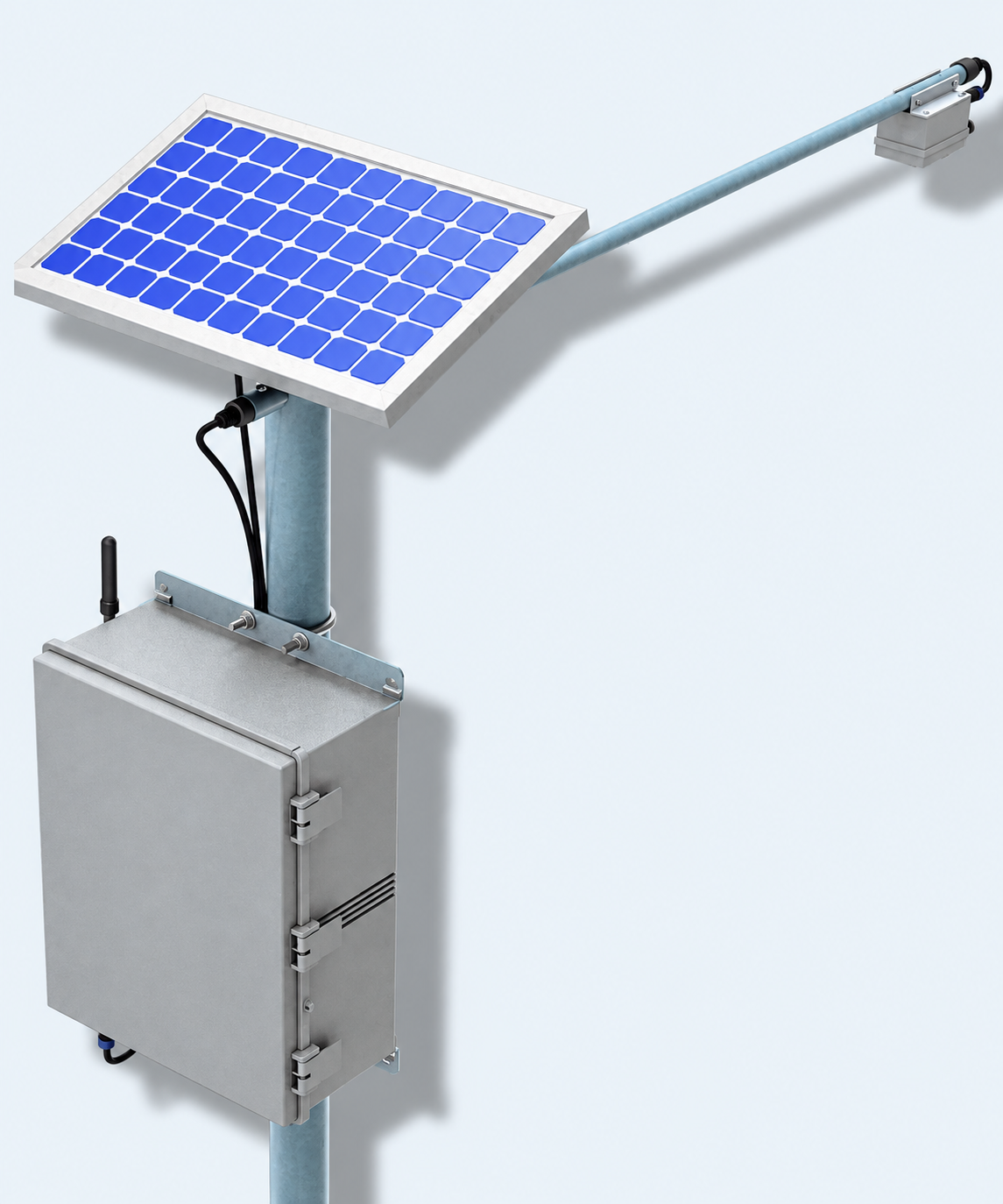
Figure 2: An example of a permanent AWLR station equipped with a solar panel, data logger, and water level sensor.
In practice, a permanent AWLR system may consist of a sensor, data logger, power supply, communication equipment, and mounting structure.
For river monitoring, a non-contact radar sensor can be installed above the water surface. Meanwhile, a hydrostatic pressure sensor can be used for measurements in monitoring wells or other locations suited to its operating characteristics.
Measurement data is recorded by the data logger and can be transmitted through a telemetry system to a monitoring platform.
This allows operators to monitor water levels remotely, review historical data, and obtain information without having to visit the site regularly.
In flood-prone areas, a permanent monitoring system can also form part of an early warning system when equipped with appropriate notification mechanisms and alarm thresholds.
Differences Between Portable and Permanent Water Level Sensors
The differences between these two systems go beyond their physical design. They also relate to monitoring requirements and how each system is operated.
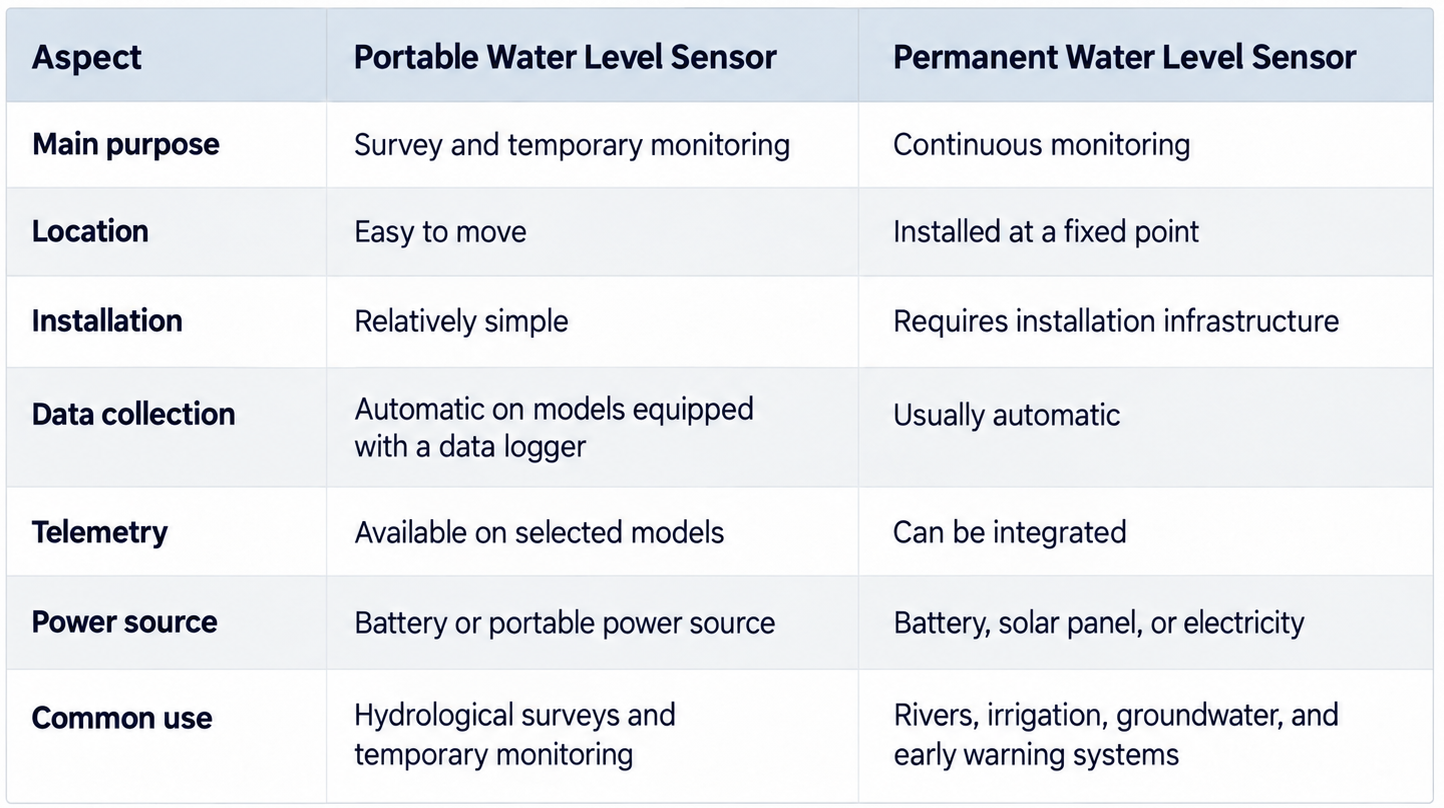
Table 1: Portable and Permanent AWLR Comparison
It is important to note that portable devices do not necessarily have lower measurement accuracy than permanent systems.
Measurement accuracy depends on sensor specifications, measurement range, calibration methods, installation conditions, and data processing quality.
Therefore, equipment selection should be based on actual measurement requirements rather than simply whether a device is portable or permanent.
When Is a Portable Water Level Sensor More Suitable?
Portable devices can be used when measurements need to be taken at multiple locations in sequence or are required only for a specific period.
Examples include preliminary surveys before water infrastructure construction, water level measurements at several irrigation canals, and temporary monitoring during research activities.
Portable devices also allow technical teams to conduct measurements without having to build permanent infrastructure at every monitoring point.
However, if multiple locations must be monitored simultaneously, a sufficient number of devices will be required. A single device moved between locations cannot provide continuous data from all those sites at the same time.
When Is a Permanent AWLR System Needed?
A permanent AWLR system is more suitable when water level changes need to be observed continuously at a specific location.
For example, river management authorities may need data to determine how quickly water levels rise during heavy rainfall. If measurements are taken only when field personnel visit the site, important changes between scheduled visits may be missed.
With a permanent system, measurements can be collected automatically at predefined intervals.
Continuously collected data also helps users understand water level patterns and changes over time.
How to Choose the Right System
Before selecting a device, several important questions should be considered.
How long will monitoring be conducted?
If measurements are needed only for a specific survey or research project, a portable device may be appropriate. For long-term monitoring at a fixed location, a permanent system should be considered.
Does the data need to be available at all times?
If operators require regular data from the same location without conducting field visits, a system with automatic recording and telemetry is needed. These capabilities may be available in both portable and permanent devices, depending on their configuration.
How many monitoring points are required?
Portable devices offer flexibility when measurements are conducted at multiple locations in sequence. However, if all monitoring points must be observed simultaneously, each location will require suitable measurement equipment.
What are the conditions at the installation site?
Water depth, flow characteristics, site accessibility, communication network availability, and power supply must be evaluated before selecting the sensor type and system configuration.
In addition to equipment prices, installation, mobilization, communication, and maintenance costs should also be considered.
Water Level Monitoring Solutions from PT Luwes Inovasi Mandiri
PT Luwes Inovasi Mandiri provides water level monitoring solutions for both portable applications and permanent installations.
For applications requiring flexibility, the Synoch Portable Water Level Sensor offers measurement capabilities supported by data recording and transmission.
For continuous monitoring, permanent AWLR systems can be integrated with data loggers, telemetry, and monitoring platforms.
System selection should be tailored to hydrological conditions, measurement objectives, monitoring duration, and users' data access requirements.
Planning a water level monitoring system?
Discuss your project requirements with the PT Luwes Inovasi Mandiri team. We can help you explore sensor configurations, telemetry requirements, and monitoring systems suited to your field conditions.
Visit luwesinovasimandiri.com for more information.