Structural Health Monitoring · SHM
Understand changes in your structure.
A structure changes with load, weather and time. SHM records selected measurements so engineers can follow those changes, investigate unusual readings and plan inspections with more context.
How it works
Follow the structure, point by point.
A monitoring plan connects selected measurements with engineering review.
Follow the measurement
Motion sensors record vibration at selected points. Readings are interpreted with traffic, wind and other site conditions.
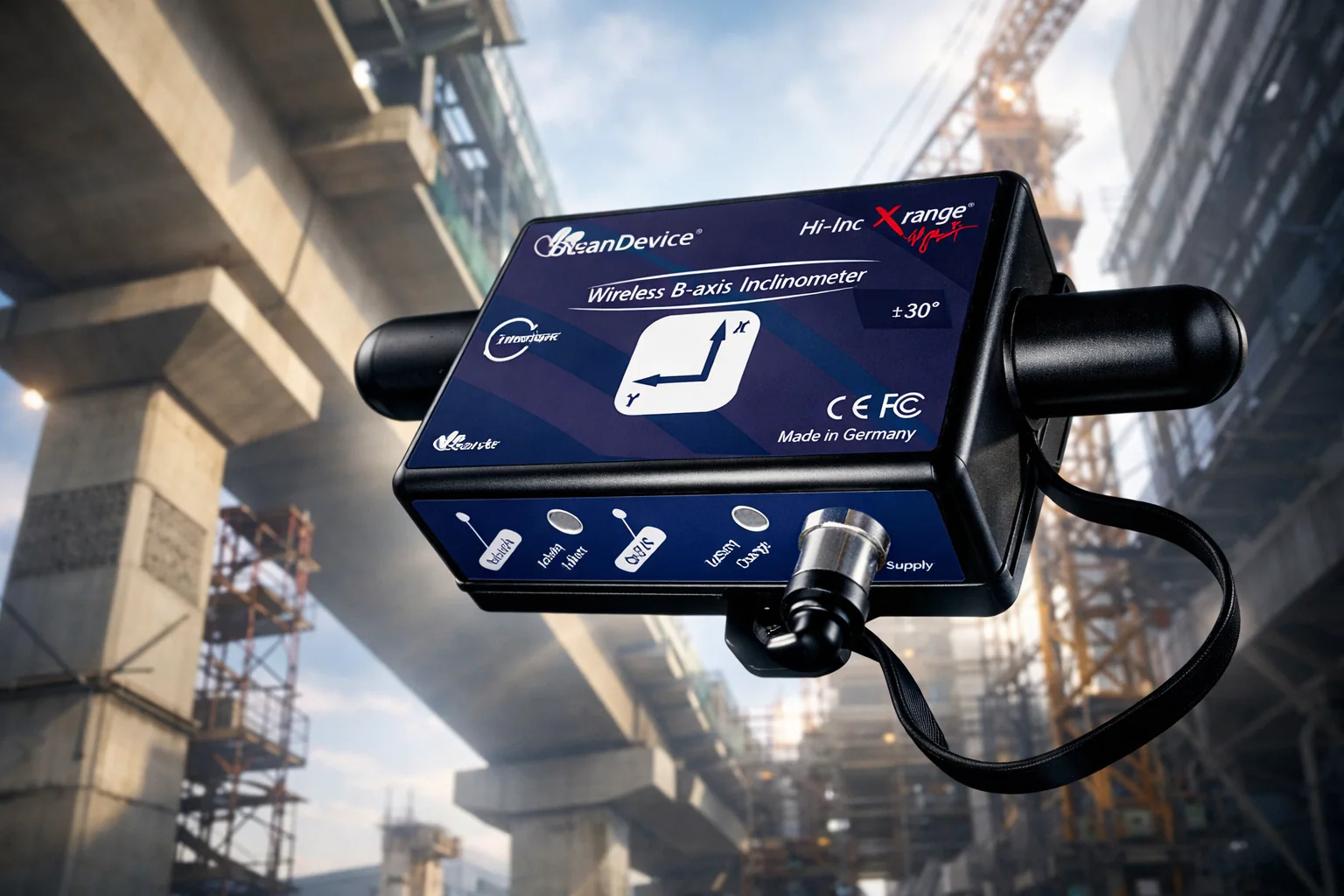
Selected instruments track tilt, displacement or other structural changes. The relevant measurements depend on the monitored asset.
Engineers compare trends and agreed limits, then investigate unusual readings. A diagram or notification is not a safety certification.
Concept illustration. Configuration follows the site design.
Measure the changes that matter here
The monitoring objective determines the instruments. The same sensor arrangement is not suitable for every bridge, building or dam.
Vibration
Accelerometers record motion from traffic, wind and other sources at selected points.
Tilt and movement
Inclinometers and displacement sensors track changes at instrumented locations.
Strain and load
Strain gauges and load cells provide readings for analysis of the monitored member or connection.
Crack width
Crack meters record changes in an identified crack; they do not inspect the whole structure.
Site conditions
Temperature, humidity or wind readings can help explain changes in structural measurements.
A site-specific sensor plan
Choose instruments, locations and recording intervals with the structural engineer. Each project uses the relevant sensors, not every sensor listed here.
Measurements support engineering judgement
Threshold alerts draw attention to readings; they are not an automatic declaration that a structure is safe or unsafe. Interpretation depends on the design, baseline, loading and inspection findings.
Record
Sensors measure selected points with timestamps.
Compare
Review trends against the baseline and agreed limits.
Investigate
The team checks unusual readings and examines the asset when needed.
Plan the next step
Engineering assessment informs inspection or maintenance decisions.
Plan around the asset and its use
Bridges, buildings and dams
Define the question first: vibration from traffic, changes in tilt, opening of a crack or movement of a monitored section. That question sets the sensor and inspection plan.
What the team can review
Time-stamped readings, historical trends and configured notifications can be included in a shared dashboard. Connectivity, data access and reporting are agreed for the site.
Make an informed choice
What change does your infrastructure team need to see?
Structural health monitoring, or SHM, records selected changes in a structure. Start with the bridge, dam or building and the engineering question—not a generic sensor bundle. The useful result is a record that responsible engineers can interpret alongside inspections and the structure's history.
Choose the change you need to observe
Movement, tilt, vibration and strain are different measurements and need different sensors. Discuss the suspected issue, existing inspection findings and the period of observation. A monitoring system supplies evidence of measured change; it does not alone declare a structure safe or replace the judgement of a qualified engineer.
Make the measurement plan specific to the structure
Agree sensor positions, reference points, measurement frequency and how readings will be interpreted. Access, cable protection, power and environmental conditions affect the installation. Ask who chooses warning thresholds and how they are reviewed. The bridge illustration shows monitoring context; it is not a claim that the pictured bridge is a Luwes project.
Ask for the system and the review responsibilities
A proposal should identify sensor types, recorder, connection, data display, installation and tests. Confirm whether engineering interpretation, periodic reports and response procedures are included or supplied by another party. Agree data ownership, access and retention. Model-specific accuracy, environmental ratings and certificates must be checked against the offered equipment.
Decide what happens after an unusual reading
A useful alert has an owner and a next step: check the data, inspect the site and involve the responsible engineer. Network failures and equipment faults must be distinguished from structural change. Plan baseline checks after installation, regular condition checks and records of any sensor replacement or reference adjustment.
Questions before you buy
Does SHM prove that a bridge is safe?
No. It records selected measurements. Safety decisions require engineering assessment and the relevant inspection process.
Which sensors will I need?
That depends on the structural question, locations and expected movement. Define the measurement plan before selecting models.
Can the system send alerts?
If included and configured. Agree thresholds, recipients, validation checks and response responsibilities with the responsible engineer.
Can existing sensors be retained?
Their condition, output, records and compatibility need checking. Integration should be scoped after that review.
What if the connection fails?
Confirm local recording, outage indication and recovery for the proposed system. A missing update should not be treated as a normal condition.
Are engineering reports included?
Confirm the service scope, responsible people and reporting schedule. Equipment supply does not automatically include structural assessment.
Compare and explore
Examples and further reading
References for the explanation
These explain measurement or system principles. The equipment and service offered are confirmed in your quotation.
Start with the change you need to understand.
Share the asset type, available drawings, current concerns and inspection history. We can discuss suitable measurements and the monitoring scope with your technical team.