Luwes solutions / Water quality
Water Quality Monitoring Solution
Monitor water quality with precision to ensure environmental safety and operational sustainability.
- pH & dissolved oxygen
- Turbidity
- Connected monitoring
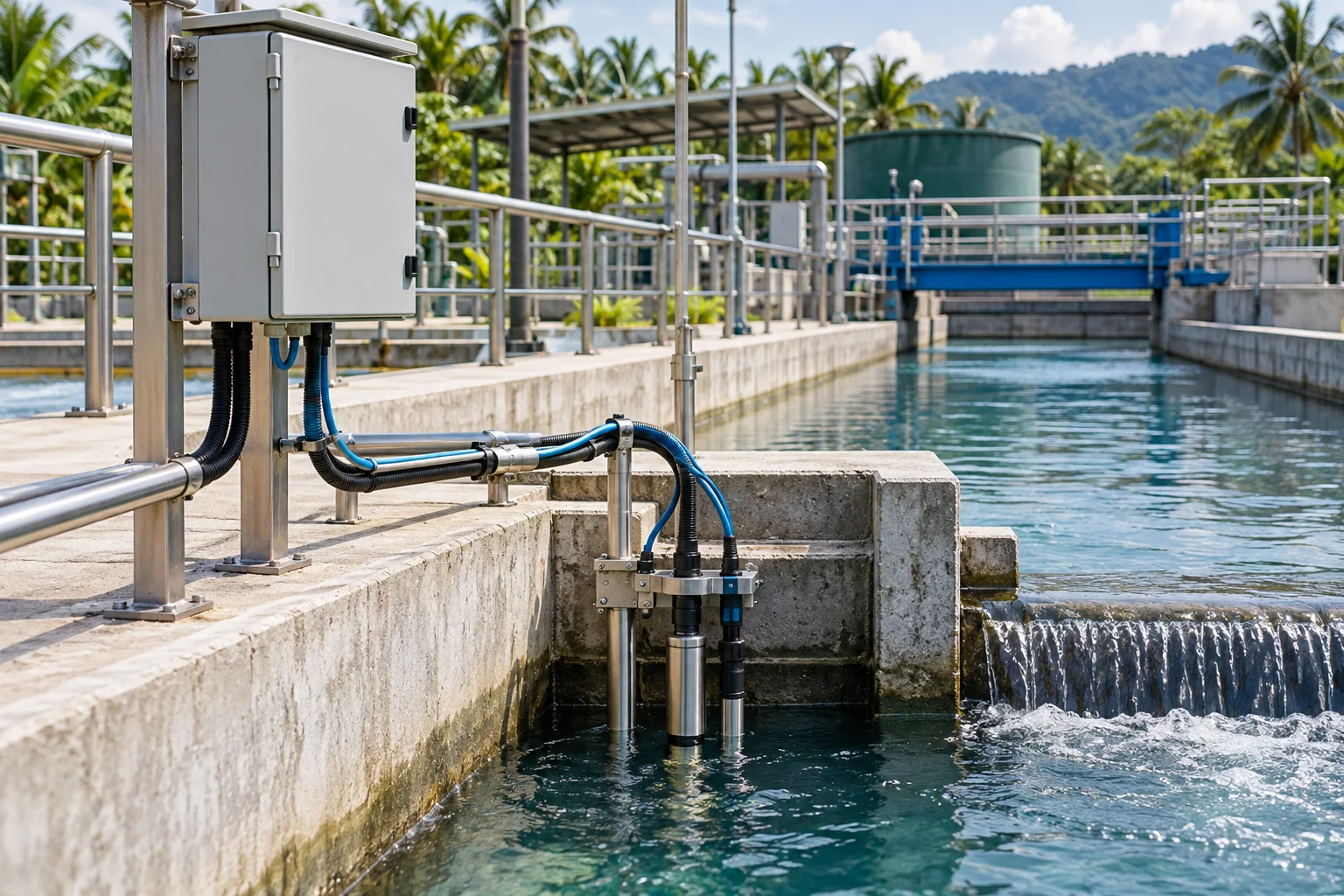
Multi-Parameter Monitoring
Water quality measurements
Monitor pH, dissolved oxygen (DO), total dissolved solids (TDS), and turbidity to track changes in water quality.
- pH Level
- Acidity or alkalinityConfirm the sensor model, range and calibration needs.
- Dissolved Oxygen (DO)
- Oxygen dissolved in waterOxygen content monitoring
- Total Dissolved Solids
- An indication of dissolved substancesConfirm the measurement method; this is not a complete water-safety test.
- Turbidity
- How cloudy the water isWater clarity analysis
Key Features
Real-time data transmission
Environmental compliance support
Industrial & municipal monitoring
Custom sensor solutions
Plan a system that fits your site
Choose the readings that answer your water-management question. A treatment plant, a fish pond and a river may need different sensors and service routines. Tell us what decision you want to make rather than buying every parameter at once.
Step 1
Choose parameters and units: pH for acidity, dissolved oxygen for oxygen in water, conductivity or TDS for dissolved substances, and turbidity for cloudiness. Confirm the sensor method and expected measurement range.
Step 2
Agree where and how the sensor is installed. Depth, water flow, deposits and safe access affect the readings and cleaning needs. Plan comparison readings or samples when needed for your use.
Step 3
Set the recording interval and the display or reporting format. Agree limits with the responsible operator, and record cleaning or calibration alongside the readings so changes can be understood.
What to prepare before asking for a quote
- Describe the water source, expected conditions and purpose: process checks, research or environmental observation. Send site photographs, access details and any existing laboratory or field measurements.
- List the parameters you need, required range and desired reporting frequency. Tell us who will clean the probes, check calibration and review unusual readings. These tasks should be included in the plan and cost discussion.
Care and ongoing costs
Submerged probes need inspection, cleaning and calibration checks. The schedule depends on the sensor and local fouling. Confirm consumables, replacement parts and training in the quotation instead of assuming maintenance is included.
Know the limits
These readings describe selected properties. pH, TDS or turbidity alone cannot establish that water is safe to drink or meets every discharge requirement. Laboratory tests and the applicable assessment may still be needed. A low TDS reading is not a complete purity test.
Further reading on the underlying method: USGS — Continuous Water-Quality Monitors
Questions before you order
Can I start with only a few parameters?
Yes, discuss the measurements that matter first. Confirm the number and type of supported sensor inputs and the cost of future additions before ordering. Adding a different probe may require changes to power, mounting or the data system.
Will the readings stay accurate without service?
No sensor should be treated as maintenance-free. Deposits, ageing and calibration changes can affect readings. Agree who checks the probes, how checks are recorded and when a reading needs a field or laboratory comparison.
Explore the relevant equipment
- Custom system — sensor selection
Discuss water-quality probes and the complete recording system.
- SCADA — process monitoring
Review connection to an existing plant monitoring system.
Consult Now
Let's discuss how we can help your business with the right IoT solutions